
Anxiety is something many people experience, yet it is often misunderstood. It can feel overwhelming, confusing, and at times even debilitating, but at it's core, anxiety is not a human flaw. It is a natural, biological response designed to keep us safe.
From a neuroscience perspective, anxiety is closely linked to the body's fight, flight & freeze system. When the brain detects a potential threat, a structure called the amygdala sends signals to activate the nervous system. The body prepares to respond...heart rate increases, breathing quickens, and muscles tense. This response is incredibly useful in situations of real danger, it helps us react quickly and protect ourselves.
However, the brain doesn't always differentiate between physical threats and perceived or emotional ones. Situations like social interactions, uncertainty about the future, or even certain thoughts can trigger the same response. When this happens repeatedly, anxiety can begin to feel ever-present, as though the body is constantly on high alert and ready to flee.
In this sense, anxiety is not the problem...it is the protector. The challenge arises when this protective system becomes overactive, stepping in even when it isn't truly needed.
One way to make sense of anxiety is through the power of metaphor. Metaphors can help translate something that feels abstract, overwhelming, or even frightening into something more familiar and understandable. Rather than anxiety being an unknown force, it becomes something that can be seen, named, and related to.
A great way that I like to explain anxiety is to imagine it as trying to take the driving seat. It attempts to steer decisions, often encouraging avoidance in the name of safety. While this can bring short-term relief, over time it may narrow a person's world. Therapy is not about removing anxiety from the car altogether...it is about gently taking back the wheel. Anxiety can sit in the passenger seat, perhaps still offering commentary, but no longer deciding the direction of travel.
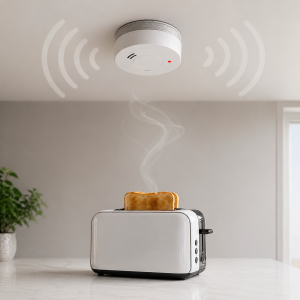
Another way to think about anxiety is as a smoke alarm in a house. A smoke alarm is designed to alert us to danger, and when there is a real fire, it is essential. But sometimes, it goes off when making toast or cooking a meal...loud, urgent, and impossible to ignore, even though there is no real threat. Anxiety can function in much the same way...a system designed to protect, but one that can become overly sensitive or even hypervigalent. The goal is not to rip the alarm out of the ceiling, but to recognise when it is being triggered unnecessarily, and to respond calmly rather than react with panic.
These kinds of metaphors can be powerful tools. they allow anxiety to feel less like an overwhelming force and more like something that can be understood, observed, and worked with. Instead of fearing it, there can be curiosity about what it is trying to communicate.
Therapeutic work, with me, focuses not on eliminated the anxiety, but on changing your relationship with it. This involves learning to notice anxious thoughts and physical sensations, and creating space before responding. Techniques such as grounding, breath work, and gently questioning anxious predictions can support this process.
Over time, this shift can open up new possibilities. When anxiety is no longer in control, there is greater freedom to make choices based on values, rather than fear. life can begin to feel broader, richer, and more connected.
Just know that you don't have to live a life restricted by anxiety. There is a way to live alongside it, without it controlling or defining you. If you would like support in that process, I would be happy to sit alongside you on that journey.
Warmly,
Grace